Showing posts with label vampires. Show all posts

Wednesday, April 27, 2016

The Gran-Fic We All Wanted. Well Kind Of.


Authors Notes:
I felt to add continuity, I would attempt to mimic the genius of Charlaine Harris’s writing style.
What have I done….. PS, I wrote it from Sookie's Point of View,  because what is True Blood without Sookie's insightful observations. Oh right. It might actually be good. 


Warnings
Sarcasm.
Like. A lot.
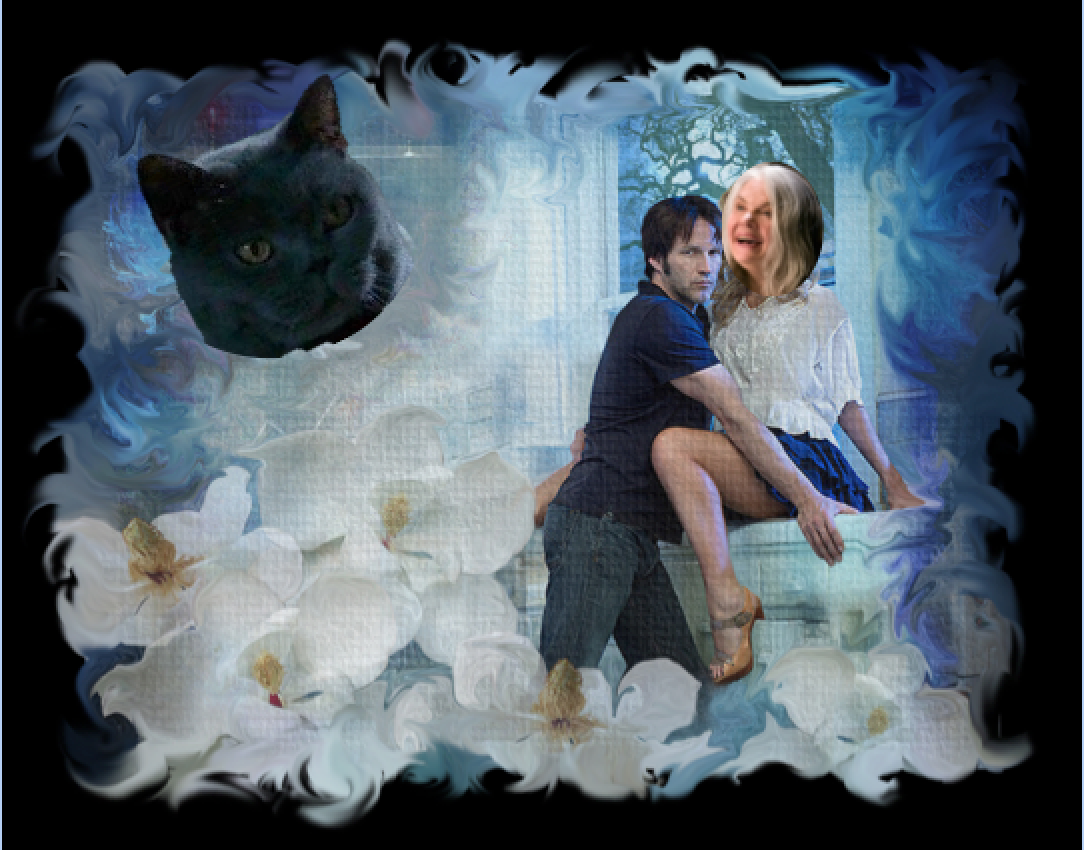


            Everything changed that day he walked into my bar. I knew the second I saw him he was different. He was a vampire.  And I knew I had to get me some of that ice cold man-mutton in just a cotton picking second. My name is Sookie Stackhouse and I am just your average, everyday, normal girl,… who can read minds. Because I guess I’m just an extra special snowflake. I am not saying I am better or prettier than everybody else in this town. I’m just saying I am the most interesting, unique, and gorgeous girl in this town with my yellow sundress with blue polka dots, and white daisies, and my pink cashmere sweater that hits my curves in all the right ways, and gets all the boys’ attention.  

Not that I want their attention.

I’m not that kind of girl.
           
I’m just a good, humble, christian woman who views all people as equal. Except, of coarse, those who don’t look like me and those I don't find attractive.  

Well, enough about me, its now time to talk about my new beau.

So this vampire was named Bill, and I knew the second I saw him, I would get him to notice me.

Senpai would be mine.


I told Gran about my new boo the second I got home. She seamed pretty excited for me. This was probably because I am not one of those girls who has a new man each night.  

 “Awesome. Wow.” She exclaimed and then went back her pie making. After a while she then said something about the civil war, but I didn’t listen. I was too busy planning my wedding to my new sugar bear. “Sookie.” She scolded, which got my attention. “When I talk to you I want you to listen to me.”

Because I am such a good granddaughter, and I love her, I decided to listen. She continued.
“If this vampire is old, he probably remembers the war.” I knew immediately that she meant the civil war. I’m just that smart. She went on. “If he remembers the war, I would like to meet him.”

Time Jump, cause why linger on actual plot content.

I finally convinced Bill to meet Gran. I mean we are practically an item, so he does pretty much anything for me. “I am mighty excited to meet your grandmother Miss Sookie.” Bill drawled and I giggled. 

 “Ohhhh Bill you know how much I love it when you talk all old like.” I flirted, subtly, back.
We entered the house. Then what happened next was… unexpected? “William Compton?” Gran asked, startled, as she looked at my boo-bear.”

Wait.

Does Gran already know my Pumpkin Waffle?

“Sookie, you did not inform me that your grandmother was the lovely Adele Stackhouse.” Bill scolded as he gazed hungrily at Gran. What happened next was an out of body experience for me. They looked longingly into each other’s eyes and then rushed towards each other, their lusting lips becoming one. 

“Ohh Adele, no woman has ever loved me like you loved me.” Bill whispered, seductively into her ear. 

Gran sighed, “Ohh Bill, you make may old woman heart just go flipity-flop.”

Wait. What.

Their passionate kisses continued to escalate as I stood there. Shell Shocked.

“Where.” Bill growled as he bit down on Gran’s neck. 

Gran groaned, “Sookie’s bed. It don’t creak like my old frame does.”

Then they, well, had sex.

Wait. What.

It was at this moment I decided to kill Gran.

So I did.

I just killed those other girls to make Gran's death look like an accident.

PLOT TWIST

Turns out, I am the Serial Killer of Bon Temps, and I bet you didn’t see that one coming. 

Authors Notes:

Obviously nothing in this story is to be taken seriously.  I just really wanted to highlight the flaws in Sookie’s character and Charlaine Harris’s writing style.


Cronos: Guillermo del Toro's Anti-Vampire Movie

I'm doing another film analysis for my final blog post, but this one is rather different. See, this is most definitely a film about vampires, too, and a rough contemporary to Francis Ford Coppola's weirdly excessive Bram Stoker's Dracula. Yet, Guillermo del Toro's brilliant debut film Cronos turns the concept of a vampire on its head without even using the word "vampire" and foreshadows the talent of a master at Gothic horror (if you've seen The Devil's Backbone, Pan's Labyrinth, and Crimson Peak to name a few, you know del Toro has a knack at this genre). Especially compared to True Blood and Dracula, among others, del Toro's twist on the vampire genre really opens up the nuances and themes that most self-described "vampire" films often lack.
In the 15th century, an alchemist creates a device that looks like a scarab beetle from the outset and contains the innards of an insect with a bite that bites back in more ways than one. The device makes those who use it immortal, but with several caveats. First, their body's old skin sloughs off to form new skin with a marble white hue. Second, they end up being able to cheat death, especially after the device is used near the heart. And finally, they have an undeniable thirst for...well, just take a wild guess.
The Cronos device.
Anyway, fast forward to Mexico in the nineties. Jesus Gris, an eccentric antiques dealer who lives with his wife Mercedes and granddaughter Aurora, finds the device inside an old statue of an archangel, and ends up getting struck by its needle. But he's not the only one after the device, as a millionaire named Dieter de la Guardia, who learned of the Cronos device from a manuscript he found of the alchemist's notes four decades’ prior, wants to find it for himself. So, him and his nephew Angel (played by fantastic actor and very frequent del Toro collaborator - Hellboy himself - Ron Perlman) end up engaging in a game of cat and mouse that Jesus, quite frankly, does not want to take part in. And then, over the course of the rest of the film... (spoilers follow, I apologize, but they're necessary here) Jesus grows thirsty for blood, cheats death at Angel's hands, has his granddaughter take care of him, destroys the device, kills the de la Guardias, and becomes immortal.
Jesus Gris, when he discovers his thirst for blood.
What I love about del Toro's approach in Cronos is its remarkable subtlety. I mean, sure, the imagery gets unnerving, and that has to do with del Toro's mantra of visuals first, with plenty of examples to choose from. There's the naked corpse and buckets of blood in the alchemist's house after his death. The creaking gears and giant bug inside the device are hard to not notice. The body horror of Jesus' transformation gets downright disturbing, too. But as far as the portrayal of Jesus goes, he's an everyman, not a Romanian royal like Count Dracula, a French elite woman like Carmilla, or a Civil War hero like Bill Compton. Jesus is just a nice old man who loves his antique shop, his car, his wife, his granddaughter, and above all, just the little things. When his shop gets raided by Angel, he wonders what's wrong. He gets absolutely disgusted when confronted with both the prospect of using the Cronos device itself and the possibility of quenching his thirst for blood, but gives in because he must. And when he cheats death, he writes a letter to his widowed wife telling her that he loves her, but has unfinished business to take care of. I guess Jesus is just that much more relatable, unlike the other protagonists and vampires we’ve seen.
This is true, even when he becomes something else entirely.
You know what makes this magnificent film, probably my favorite horror film from the '90s, that much better in terms of movies with vampirism? Well, Cronos has no actual sex in it. (Then again, aside from the remarkably discreet but absolutely twisted sexuality in Crimson Peak, del Toro usually keeps that down in his films, but I digress.) I think the closest things, though, would be the tied up naked body in the Alchemist's home, and to a lesser extent, the first time Jesus gets bitten by the Cronos device. Sure, he gets bitten on the hand, but the blood spurts out just enough to make it somewhat sexual. Indeed, he uses the device several times throughout the film, perhaps giving it an addictive quality similar to how True Blood utilizes vampire blood, or "V," as a drug.
We don't get to see much of the device's innards, but it's clear there's a bug in it.
And to add to that, the whole "blood as semen" metaphor that pervades much vampire lit here doesn't really work for Cronos, which also provides a fresh perspective there, too. It is not Jesus' bloodlust that is inherently problematic, but the fact that a fearsome gangster whose rich uncle is looking for immortality is chasing him and threatening his life, when really, he's just an antiques dealer who found something forged by a 16th-century alchemist. Even the scene where Jesus Gris feeds off of his nemesis, the elder de la Guardia, lacks the Freudian elements of Dracula, for example, as Jesus doesn't really have fangs that pierce in descriptive ways that would make Freud blush (oh, Dead Until Dark...), and as far as villains looking for immortality go, Dieter is every bit the entitled type. There's a cathartic element to the film's second and last feeding scene, in other words, especially when Jesus' granddaughter Aurora, who's already pretty awesome up to this point, acts like a total badass and strikes him in the head.
And then Angel (Ron Perlman) gets it too. Yes, this is Hellboy, Reinhardt the...vampire (how ironic!) in Blade II, and the practitioner of traditional Chinese medicine in Pacific Rim. He works with del Toro a lot.
Many of del Toro's works have been criticized in the past for not having enough in the way of straight up scares. If it's any consolation, though, Cronos creeps me out more than Coppola's Dracula, with its John Lennon shades, Keanu Reeves, and VERY subtle sexual metaphors, and certainly far more than Charlaine Harris' campy vampire smut. Cronos thrives on its impressive visuals showcasing a brand of dark fantasy only del Toro could come up with, which take precedence over any excessive cliches. Jesus, this film's extremely sympathetic protagonist, just wants out of the whole vampire thing. Along the way, del Toro raises good questions about the prospect of immortality and how it relates to the repressed manifestations that pervade many depictions of vampires, from Carmilla and Dracula onward. At any rate, what makes Cronos so compelling, to the point where I consider it my favorite cinematic depiction of vampirism, is del Toro's emphasis on discretion. After all, he does all of this without mentioning the word "vampire" even once. 

Tuesday, April 26, 2016

The Issue with Colored and Foreign Characters


We have seen many examples in True Blood where colored people are ridiculed, stereotyped, or even humiliated. It seems to be a common thing in vampire shows and movies like True Blood and Dracula to make foreigners and people of color into laughable or ridiculed characters. Perhaps this can translate into society’s feeling about foreign invasion and the still existing racial issues in our country.
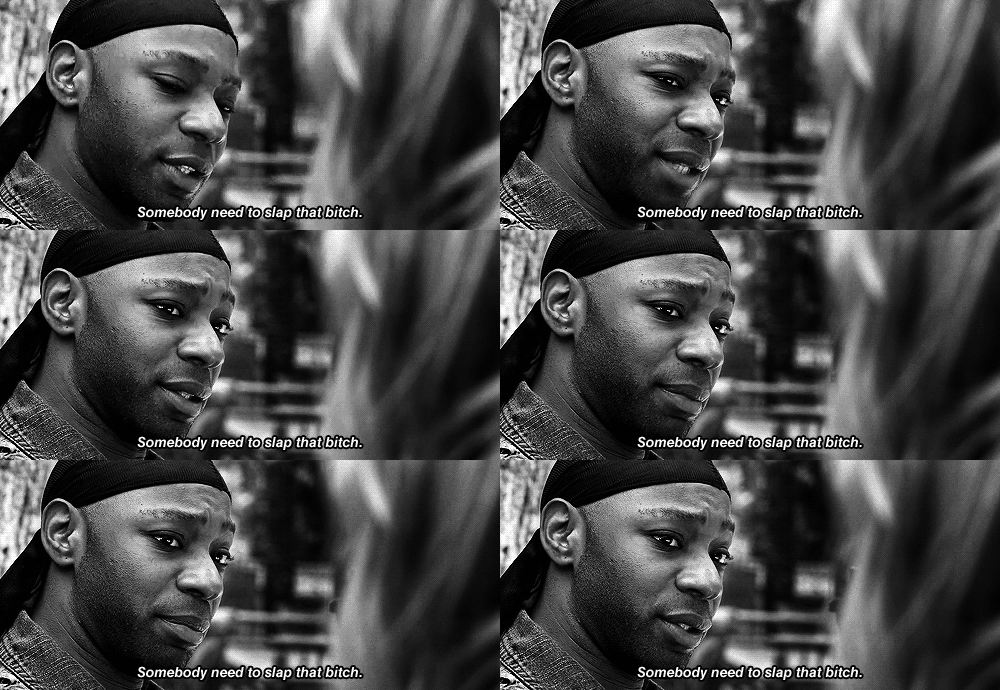
To start off, a plethora of examples can be found in True Blood. Lafayette? Let’s make him flamboyant, drag-queen-like, sassy, a drug dealer, and openly gay.


http://25.media.tumblr.com/5898d420d5cf74300c5d22652370be9f/tumblr_mgzzqfM3nK1rzhkiyo1_500.gif


Tara? She is your typical angry black woman with an attitude who tells it like it is. She puts her hand on her hip almost constantly and is very bossy. Rene is another foreign character who isn’t as easily considered as an outsider, but by all means, he definitely is. His Cajun accent is very prominent when he speaks and he’s pretty tan even for a Louisiana native. How is he degraded? For one, he’s the main villain and a serial killer. That can be a quick way to demoralize your character. The last character I want to mention is Amy Burley, Jason’s hippie love interest. Yes, she isn’t a person of color, but she is an outsider by the show’s standards due to her educational background. No one in the show has been portrayed as having any education  and sadly, most characters aren’t too civilized to begin with. Throughout the show, Amy is constantly ridiculed by the things she says, which ironically come from her educational background. To make matters worse, it is eventually revealed that she is completely psycho and bloodthirsty (pun intended) for “V”.
In Dracula, it is apparent that the comedic relief is Quincy Morris, the Texan. What a surprise. He isn’t portrayed as the brightest character in the cast and that can easily be seen by the completely stereotyped remarks he makes with his very thick attempt at a Texan accent. He’s exactly what outsiders would think of when they think “Texas.” He’s a gun-slinging, mustache-wearing, rough Texan who isn’t very smart and offers violence as the main source for solutions. It is not a coincidence that he happens to die at the end of the movie. Is this an elimination of foreign invasion? Probably.
To conclude, I feel that it is very apparent that foreigners are not the main focus in Vampire shows and movies. I believe that part of the reason for writers and directors doing this is that they want to comply with society’s views on race and foreign invasion. Otherwise, they wouldn’t specifically target this demographic.

The Overprotective/Possessive Vampire

The vampires that we’ve been reading about, quite frankly, remind me a little bit of my dad. He’s insanely overprotective of me and “joked” relentlessly for years that I would never be allowed to date until I was 30—thankfully, that rule has been dismissed, but that doesn’t mean he doesn’t constantly want to know where I am and whether or not I’m okay. Since entering college, he’s let up a bit, but I don’t even want to think about horror stories from high school when he made sure I was home by insanely early times.

Of course, my dad and I don’t have the same relationships as the vampires and humans do in these books, but the relationships are still overbearing on one end of the relationship. For example, Jonathan Harker, dazzled by the three sexy vampiresses, almost allows them to feed on him until Dracula saves the day by coming in and declaring “‘This man belongs to me!’” (Stoker 43). Dracula lays a claim on Jonathan, as if Dracula actually possesses him—a bit rude, considering he didn’t ask Jonathan first.

Carmilla, meanwhile, freaks out Laura during one of her emotional, lesbian fits when she tells our traditional, Victorian narrator, “‘You are mine, you shall be mine, you and I are one forever’” (Le Fanu 18). Carmilla, while draining the rest of her victims and causing their deaths within days, draws out her feeding on Laura because of her personal and romantic feelings. She wants Laura to be her own human forever, but Laura simply isn’t having it.

Bill Compton seems even more possessive of Sookie than the previous vampires were of their favorite humans, if that’s possible. His first instance of claiming rights on her came during the first scene with Malcolm, Liam, and Diane. They’re about to sink their fangs into her when he suddenly says, “‘Sookie is mine’” (Harris 71). When Sookie questions him about this later, the only human we see to challenge their overprotective vampire, he says bluntly, “‘It means you are my human’” (102). When they talk to Eric in Fangtasia, Bill repeats his ownership of her yet another time—talk about a possessive relationship.

In the television series True Blood, we see another instance of ownership, though this one is between a vampire and vampire-to-be. After the Civil War has ended, Bill wakes up drained of most of his blood, with Lorena, his maker, telling him that the only way to return to his family is to drink from her blood. At first he’s apprehensive, but he also really wants to see his family, so he gives in. Lorena immediately begins talking about how they’re going to be together forever, and she says while he drinks her blood, “You . . . are mine!”


This final scene shows the full extent of why vampires are so possessive over certain humans—once they find one they really like, they decide they want to be with that human forever. Perhaps all the other vampires we’ve seen intended to change their humans to vampires at some point down the line and monopolize their love, especially so no one else could have them.

Thursday, April 21, 2016

Why Prince Would Have Been Great Playing Bill Compton

Let's start with the basics on why legendary musician Prince would have been divine as Bill Compton. 

True Blood might have had the greatest soundtrack in television history. Prince's songs are incredibly sensual and provocative, and would have fit in magnificently with the vampire theme. Instead of predictable country songs crooning in pie and sex montages, we could have had Prince's wonderful voice surrounding Sookie's grief, and later on his own sex scene. Can you imagine "Purple Rain" playing during the aftermath of Gran's funeral or "Kiss" playing when Bill Compton (Prince) walks in the bar for the first time? Maybe throw in some "When Doves Cry" or "International Lover" playing during the sex scenes instead of silence or misplaced country ballads? We probably could have gotten some great new music out of this deal too. We also could have had more montages and not cringe every time they happened. The argument could be made that country music just fits the Louisiana theme, but that, however, that brings me to my next point.

Prince would have brought a multiracial relationship to primetime, and added an extra level to the slightly not-so subtle racial tension surrounding the series. Plus, it would still make sense, considering the high population of African-Americans in Louisiana, and Prince's own supportive feelings towards the Black Lives Matter movement. We also wouldn't have to be forced to watch Tara and Sam have their own whiny, ghastly affair to display this tension which pulls away from Tara's own plot. 

"I Would Die 4 U" from the Purple Rain album
Another important feature Prince would also highlight in the seasons is his genderfluidity and own sensuality. Sure, Lafayette presents a little bit of this with his makeup and flamboyant style (sort of), but Prince would have taken the theme of gender inversion and ran with it. We don't have anything from Bill Compton, and it's honestly a shame. Prince would have taken the symbolism or stealth out of gender inversion, and slapped the audience in the face with it.

Prince would have also not been as awkward as Stephen Moyer, the original Bill Compton, during scenes that were suppose to be sexy or particularly glamorous. The scenes would have been definitely more genuine and more unconventional as vampiric sex scenes should be. If I wanted boring, heteronormative, non-vampiric sex, I'd go watch 50 Shades of Grey. While not many music videos are publicly available of Prince on the Web, the Cream music video certainly proves he can fit the part if you need convincing. 

The only other problem with this casting decision would be Sookie Stackhouse's character having to be severely revised. Honestly, I don't think that many people would see that as a problem though. Overall, while True Blood does have it's high points, it could have been made a truly iconic masterpiece if Prince had been casted as Bill Compton. 

(Note: The videos posted might be taken down or replaced with other music, as Prince wasn't a fan of having his music onYouTube or streaming platforms.)

Tuesday, April 5, 2016

Vampire's Kiss: Renfield Un-(Nicolas)-Caged

I never thought I would preface a blog post for an English class with this, but man, Nicolas Cage doesn't get enough credit. It doesn't occur to many that some of his roles are actually pretty convincing (he won an Oscar, you guys...) but if you want a role that is simultaneously his best and worst, here it is. If you've ever seen the viral video "Nicolas Cage Losing His Shit" and were wondering where the ridiculous "I'M A VAMPIIIIIIRE!" soliloquy and the infamous scene where he recites the alphabet to his confused psychiatrist came from, this is it. The 1989 film Vampire's Kiss can best be described as an over the top psychological thriller with blackly comic overtones. I appreciate it that much more having read Dracula, especially with the parallel to that novel's depiction of male vampirism through Renfield.

He bought plastic fangs because they were cheaper.
An undercurrent of sexual repression runs through Cage's protagonist Peter Loew, who gets tired of his day job as a top publishing agent, berates his poor secretary Alva to no end, has fruitless sessions with psychiatrist Dr. Glaser, and, in one of his many one night stands, ends up bedding Rachel, a girl whom he thinks is a vampire just because she bites his throat a little. But apparently, in his words, "she's a goddamn vampire!" It seems as if screenwriter Joseph Minion, who also wrote Scorsese's crazy neo-noir After Hours, wanted to take the obvious metaphor of throats in Dracula and drag it in a little bit further. But with that said and done, one question is in the back of my head whenever I look at this film is the question: is Loew really a vampire?
A real twist on the Renfield/Dracula relationship, I'm sure.
Any sane person would say the obvious answer is no, because vampires aren't real. But Loew's sanity reaches a tipping point when he finally gets some excitement in his life, when Rachel bites his neck. Again, throats embody phallic symbols in Dracula, and it doesn't take much searching to find out that Loew, by all means a bitter guy who makes his secretary do a bunch of work and talks VERY openly with his psychiatrist about his job failures and sexual encounters, needs just one last bit of action to regress into a role he can't get out of. It makes me wonder what could have happened if the vampiresses actually bit Jonathan Harker at the beginning of Dracula.
Loew, dancing like he doesn't care.
Even then, I'm certain even Jonathan wouldn't go full Renfield and eat a cockroach on camera, turn his studio apartment into a makeshift vampire pad, get dark glasses and plastic vampire teeth (he couldn't afford the fiberglass fangs), or bite people. When he finds Rachel, she doesn't care at all...and neither does he, as he proceeds to curse her out very profusely. Indeed, Rachel is shown mainly as a figment of Loew's wild imagination up to that point, feeding on him and making him lose it that much more.
I'm not kidding about the cockroach, either. That's real.
And then there's poor Alva. Before Loew has another soulless one-night stand that turns out to be a feeding frenzy, he bites her on the throat, sexually assaults her, and almost kills her. Alva gets her brother to avenge Loew for his mistreatment, and in the final scene, where Alva's brother enacts his revenge by stabbing Loew in the chest with a crude stake from the leg of a chair in Loew's studio apartment/makeshift lair, Loew finally frees himself from his vampirism, repression, madness, and above all, ennui.
In other words, he's Uncaged! And that's a really big stake...perhaps some repressed masculinity on his part?
I may be reading a bit too much into Vampire's Kiss, even as I draw parallels to the major characters in Dracula - but especially Renfield. Loew and Renfield differ in many ways, though. Stoker does not place much of his major focus on Renfield, while Loew is this film's protagonist. Accordingly, the other characters take a backseat to him. Dr. Glaser is most definitely not the Seward type, and the motive of Alva's brother can be categorized as straight up revenge. Finally, Renfield is confined, while Loew is a publishing agent, and thus, the latter is most definitely in the 1%. Thus, it says a lot that a guy spending $$$ on therapist visits, club outings, rent for a studio apartment in NYC, and plastic vampire teeth can be compared to a man who spends his days confined in the squalid conditions of a Victorian asylum.

"R" is for "Renfield would NEVER recite the alphabet like this to Seward!"

In the end, I actually consider Vampire's Kiss to be a forerunner of psychological thriller films such as American Psycho, Nightcrawler, and Gone Girl, which all go deep into the psyches of unlikable characters and get their black comedy from the crazy stuff they do. Yet, what separates Vampire's Kiss from those would, no doubt, have to do with Cage's miraculous overacting. Nothing can hold a candle to his cockroach-eating, pigeon-catching, plastic fang-bearing work here. Nothing, I tell you.
And this film has been immortalized in another way, too: anyone with Internet meme cred knows this as his "YOU DON'T SAY" face.